Why Current Tells You Almost Everything
A motor or compressor's current draw is the single most revealing diagnostic number you can take in the field. It tells you whether the machine is loaded correctly, whether windings are healthy, whether bearings are dragging, and whether the three phases are balanced — all without opening the unit. A clamp meter reads that current in seconds, on a live circuit, with no downtime.
This guide covers the three measurements that matter most for HVAC and motor work: full-load current, inrush (starting) current, and three-phase balance.
1. Full-Load Amps (FLA): Is the Motor Loaded Right?
Every motor and compressor has a nameplate rating — the full-load amps it should draw at rated load. Measuring actual running current and comparing it to the nameplate is the fastest health check there is.
- Reading near nameplate FLA — the motor is correctly loaded and healthy.
- Reading well above FLA — overload: a seized bearing, a mechanical jam, low voltage, or a failing compressor working too hard.
- Reading well below FLA — under-load: a slipping belt, loss of refrigerant charge, or a coupling problem.
To measure FLA: set the meter to AC current, clamp around one phase conductor (never two — the fields cancel and you read near zero), let the machine reach steady running state, and record the True RMS value.
2. Inrush Current: Catching the Startup Spike
When a motor or compressor starts, it briefly draws 5–8 times its running current — the inrush. A healthy unit's inrush settles within a second or two. Problems show up as inrush that is too high, or that takes too long to settle.
You cannot catch this with a normal reading — the spike is over before the display stabilises. Use the meter's INRUSH mode (sometimes labelled "starting current"), which captures the startup current over a fixed window. Set the mode, clamp the conductor, then start the motor.
- Normal inrush, quick settle — healthy start.
- Very high inrush — possible shorted windings, weak start capacitor (single-phase), or mechanical binding.
- Prolonged high current after start — the motor is struggling to come up to speed under load.
Repeated high inrush is also what trips breakers and burns contactors, so this measurement explains a lot of nuisance-tripping complaints.
3. Three-Phase Balance: The Imbalance Killer
On a three-phase motor, the three phases should draw nearly equal current. Imbalance forces the motor to overheat and dramatically shortens its life — a 10% current imbalance can cause a 50% rise in winding temperature.
Measure each phase in turn and compare:
- Within ~5% of each other — acceptable balance.
- 5–10% spread — investigate: loose connections, supply voltage imbalance, or developing winding fault.
- Over 10% spread — serious; find and fix before the motor fails.
A quick way to express it: divide the largest deviation from the average by the average, times 100. Anything over 10% needs action.
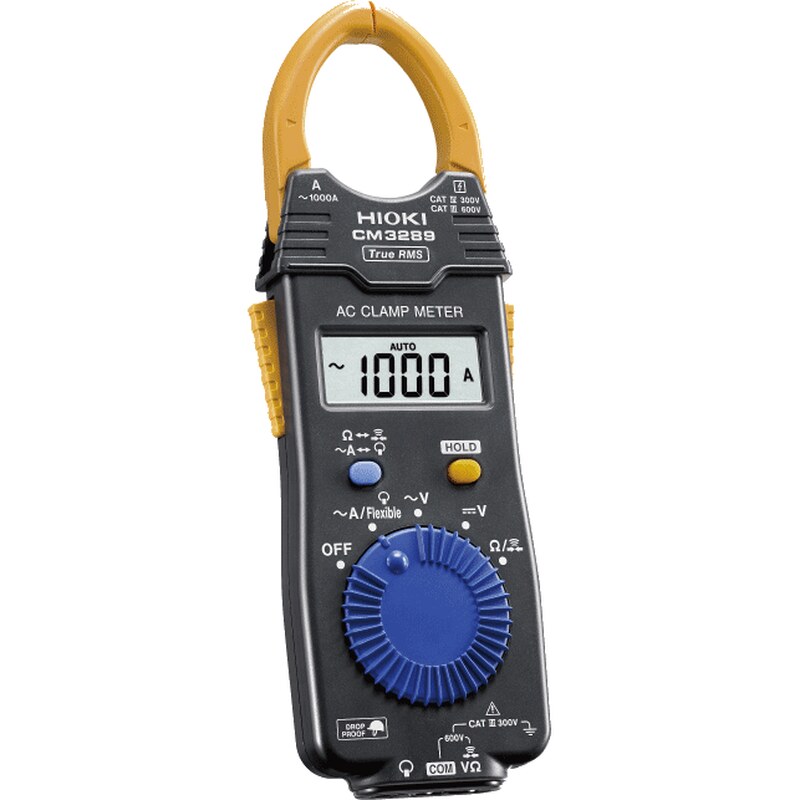
⚙️ Hioki CM3289 — AC Clampmeter, True RMS, 1000A, CAT IV 600V (AC motor work)
View Product WhatsApp QuoteWhy True RMS Is Non-Negotiable Here
Modern HVAC systems increasingly use variable-frequency drives (VFDs) and inverter-driven compressors. These chop the waveform into something far from a sine wave. An average-responding meter will under-read VFD-driven motor current by 10–25%, making a healthy motor look under-loaded or hiding a real overload. For any HVAC or motor diagnostics today, use a True RMS meter.
What to Measure, and Which Mode
| Goal | Mode | What it reveals |
|---|---|---|
| Full-load amps | AC A (True RMS) | Correct loading, overload, under-load |
| Inrush current | INRUSH | Start capacitor, winding, binding faults |
| Phase balance | AC A (each phase) | Connection / supply / winding imbalance |
Frequently Asked Questions
Q: Can I clamp all three phases together to get total current?
A: No. With balanced three-phase, the fields nearly cancel and you will read close to zero. Always measure one conductor at a time.
Q: My compressor draws high current at startup but runs fine. Is that a problem?
A: A brief high inrush is normal — motors draw 5–8× running current at start. It is only a concern if the inrush is excessive or takes several seconds to settle.
Q: Do I need AC/DC for HVAC work?
A: For the AC compressor and fan motors, AC-only True RMS is sufficient. You need AC/DC only if you also diagnose DC control circuits or inverter DC buses.
Q: What clamp meter is best for large chillers and big motors?
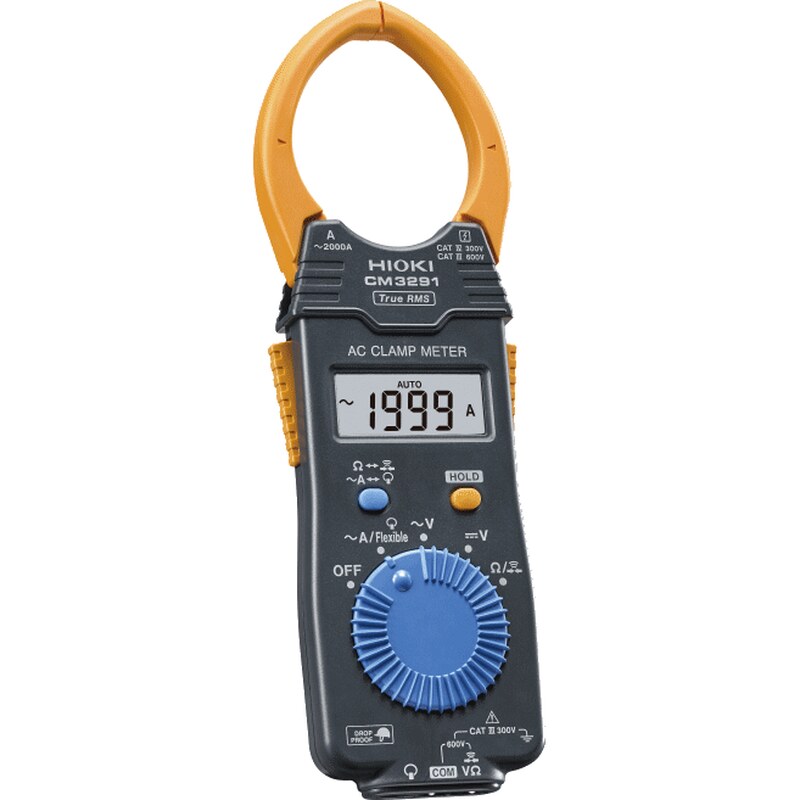
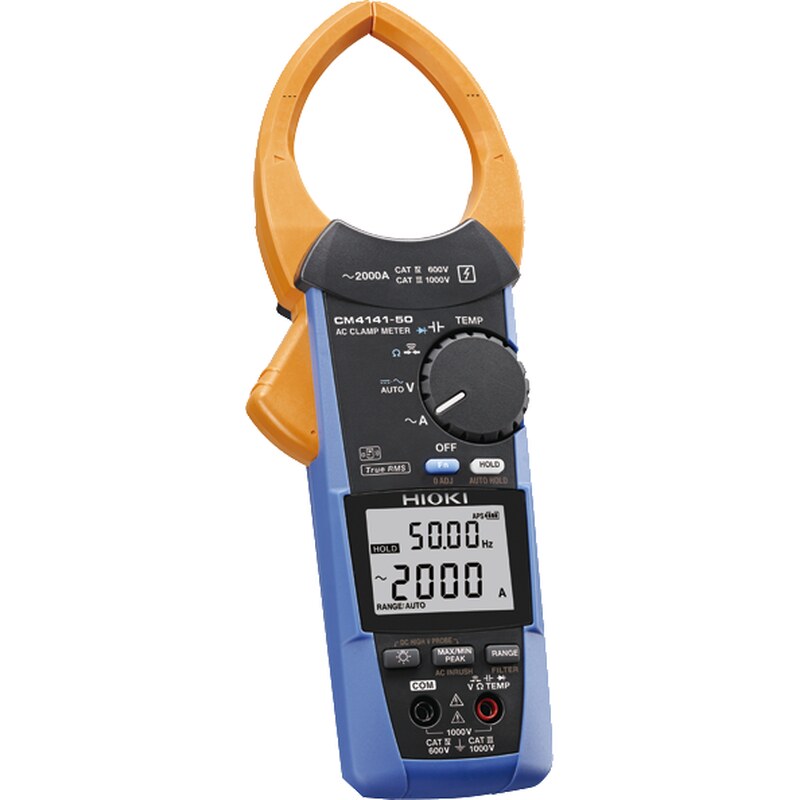
A: For high currents, choose a higher-range meter such as the CM4141-50 (2000A) or CM3291 (2000A AC). Smaller split units are fine with a 1000A meter like the CM3289.
Need the Right Meter for HVAC and Motor Work?
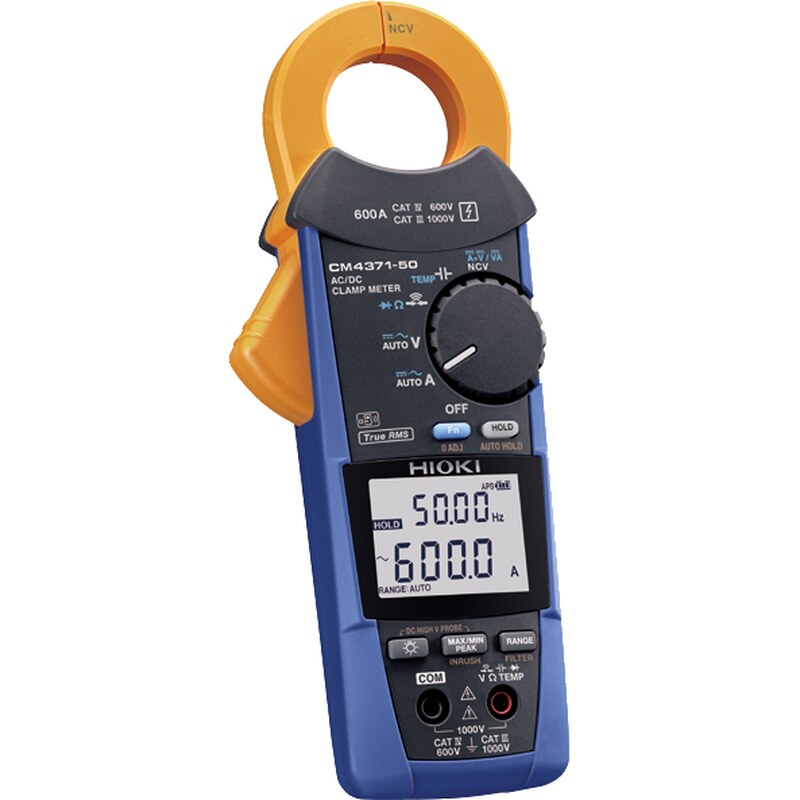
From light AC-only contractor meters to high-range AC/DC instruments for chillers and large drives, Industrial Supply Syndicate stocks the full Hioki clampmeter range — pan-India delivery, GST invoice, and technical support to help you pick.