The Short Answer
An AC-only clamp meter measures alternating current — grid power, inverter output, motor and appliance loads. An AC/DC clamp meter measures both alternating current and direct current — batteries, solar DC strings, charge controllers, and DC drives. If any part of your work touches DC, an AC-only meter will read zero on those circuits and is the wrong tool.
That single difference decides which meter you buy. Everything below explains why the two are built differently, and how to pick without overspending or under-buying.
Why AC-Only Meters Cannot Read DC
The two meter types use fundamentally different sensing technology inside the jaw.
AC-only meters use a current transformer (CT). The jaw is a split iron core that acts as a transformer. A changing magnetic field from the AC conductor induces a proportional current in the core windings. This is simple, accurate, and cheap — but it only works with a changing field. DC current produces a steady, unchanging field, so a CT induces nothing. The meter reads 0A.
AC/DC meters add a Hall-effect sensor. A Hall sensor produces a voltage proportional to the magnetic field strength itself — whether that field is changing (AC) or steady (DC). This lets the same jaw measure both. The added sensor and circuitry are why AC/DC meters cost more.
When AC-Only Is Enough
You can save money with an AC-only meter if your work stays entirely on the AC side:
- General electrical contracting — verifying circuit loads, troubleshooting breakers, checking appliance current draw
- Motor and pump current — most industrial motors run on AC mains
- Panel and distribution work — measuring phase balance on three-phase AC boards
- HVAC compressors and fans — AC loads, provided you do not need DC control-circuit diagnostics
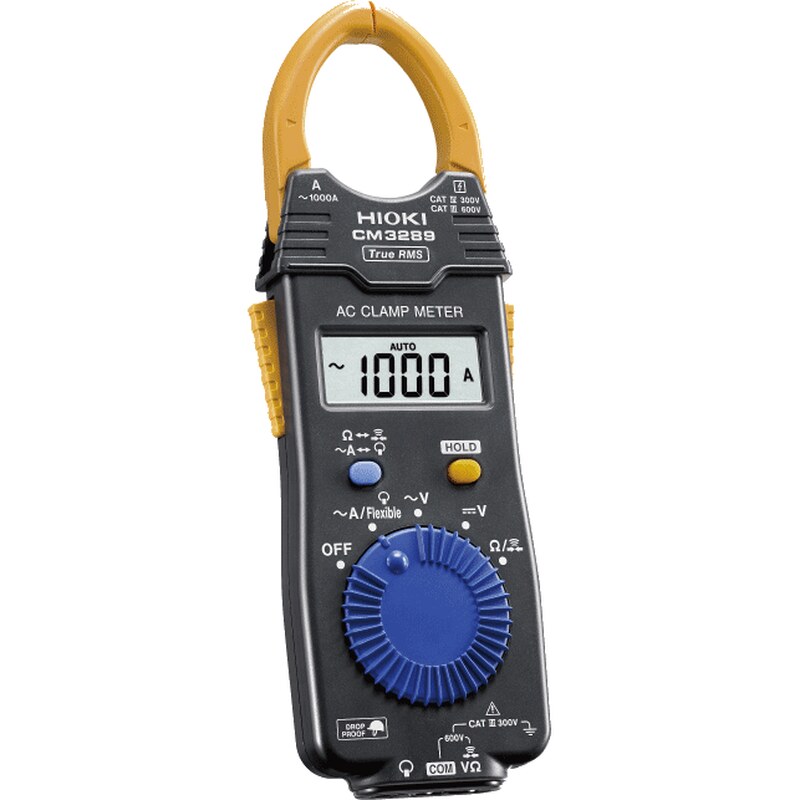
For this work, an AC-only True RMS meter like the CM3289 gives professional accuracy at a lower price.
When You Must Have AC/DC
The moment your work includes any of the following, AC-only becomes useless and you need AC/DC:
- Solar PV systems — the DC side (panels, strings, combiner boxes, charge controllers) is roughly half the system
- Battery and UPS systems — charge and discharge current is DC
- EV charging and battery packs — high-capacity DC measurement
- DC drives and traction systems — variable-speed DC motor circuits
- Automotive and telecom power — 12V / 24V / 48V DC systems
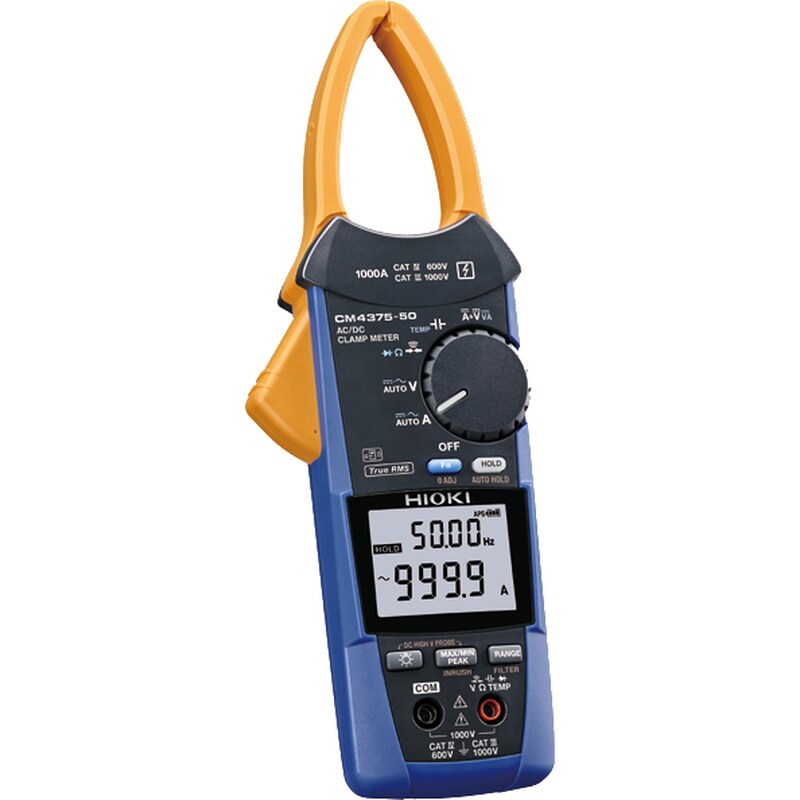
⚡ Hioki CM4375-50 — AC/DC Clampmeter, 1000A, CAT IV 600V / CAT III 1000V
View Product WhatsApp QuoteOne More Thing: True RMS vs Averaging
This is a separate question from AC/DC, and it matters on both meter types. Cheap meters are "average-responding" — they assume a clean sine wave and calculate a value. Modern loads (VFDs, inverters, soft starters, LED drivers) produce distorted waveforms, and on those an averaging meter under-reads by 10–25%.
A True RMS meter measures the actual heating value of the current regardless of waveform. For any modern electrical work — and especially solar — insist on True RMS whether you choose AC-only or AC/DC.
Quick Comparison
| Model | Type | True RMS | Max Current | Best For |
|---|---|---|---|---|
| CM3289 | AC only | Yes | 1000A | Budget AC contractor work |
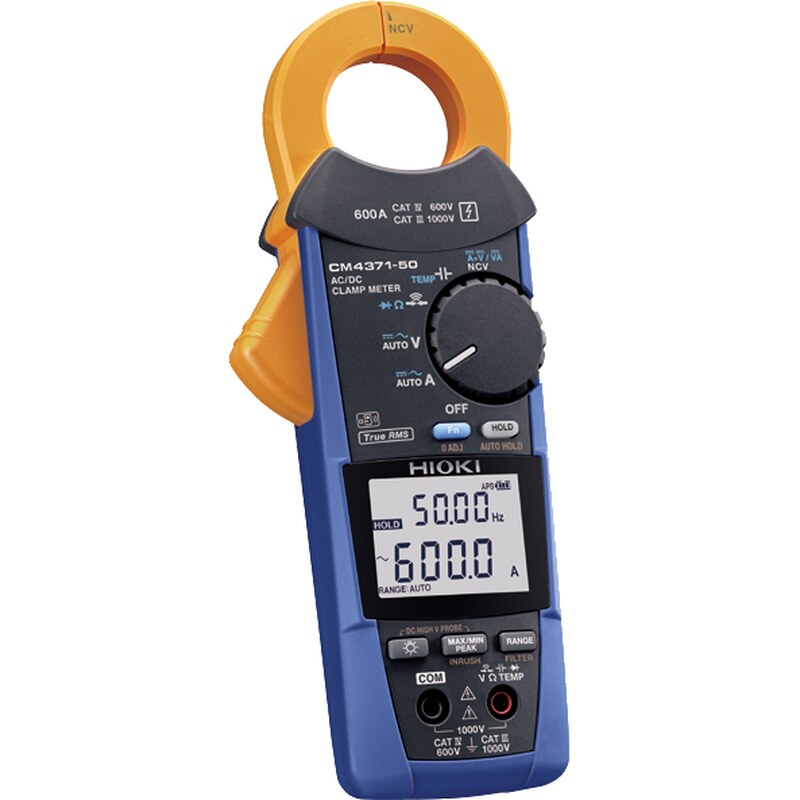
| CM4371-50 | AC/DC | Yes | 600A | Residential solar, batteries |
| CM4375-50 | AC/DC | Yes | 1000A | Commercial solar (RECOMMENDED) |
Frequently Asked Questions
Q: Can an AC/DC meter do everything an AC meter can?
A: Yes. AC/DC meters measure AC too, so they are a superset. The only reason to choose AC-only is cost, when you are certain you will never measure DC.
Q: My meter reads 0A on a battery cable. Is it broken?
A: Almost certainly not — it is an AC-only meter on a DC circuit. That is expected behaviour. You need an AC/DC meter for battery current.
Q: Is AC/DC worth the extra cost for occasional DC work?
A: If you do any solar, battery, or EV work even occasionally, yes. Carrying one AC/DC meter is cheaper and faster than owning two meters or being unable to complete a job.
Q: Does AC/DC affect accuracy on AC measurements?
A: No. A quality AC/DC meter like the Hioki CM43xx series delivers the same professional ±1–1.5% accuracy on AC as a dedicated AC meter.
Still Unsure Which to Choose?
Tell us what you measure most — grid/motor loads, or solar and batteries — and we will recommend the right Hioki model. Industrial Supply Syndicate ships pan-India with GST invoice and full technical support.