Why Clampmeters Are Essential for Solar PV Work
India's solar capacity has grown exponentially — from 5 GW in 2015 to over 70 GW today. This boom has created demand for skilled solar installers and O&M technicians who need reliable test instruments. When commissioning or troubleshooting a solar PV system, accurate current measurement is critical. But traditional in-line ammeters require breaking live circuits, causing downtime and safety risk.
A professional AC/DC clampmeter eliminates this problem. Non-contact measurement, True RMS accuracy, and CAT safety ratings make clampmeters the industry standard for solar electrical work in India.
The Challenge: Measuring Current Without Breaking Circuits
During solar PV system commissioning, you need to verify current at multiple points:
- Inverter AC output: Confirm each inverter produces rated current (typically 40–150A)
- Main AC breaker: Verify balanced three-phase current distribution
- Battery charge current: DC measurement on off-grid systems
- String combiner boxes: Check equal current across solar strings
Traditional in-line ammeter method requires de-energizing the circuit, breaking connections, inserting the meter, and re-energizing — a 15–20 minute process per measurement. For a 15-point commissioning, that's 4+ hours of downtime. At ₹500–1000 per minute in lost generation revenue, downtime becomes expensive.
A clampmeter solves this instantly: Clamp around the live conductor, read the current in seconds, no downtime required.
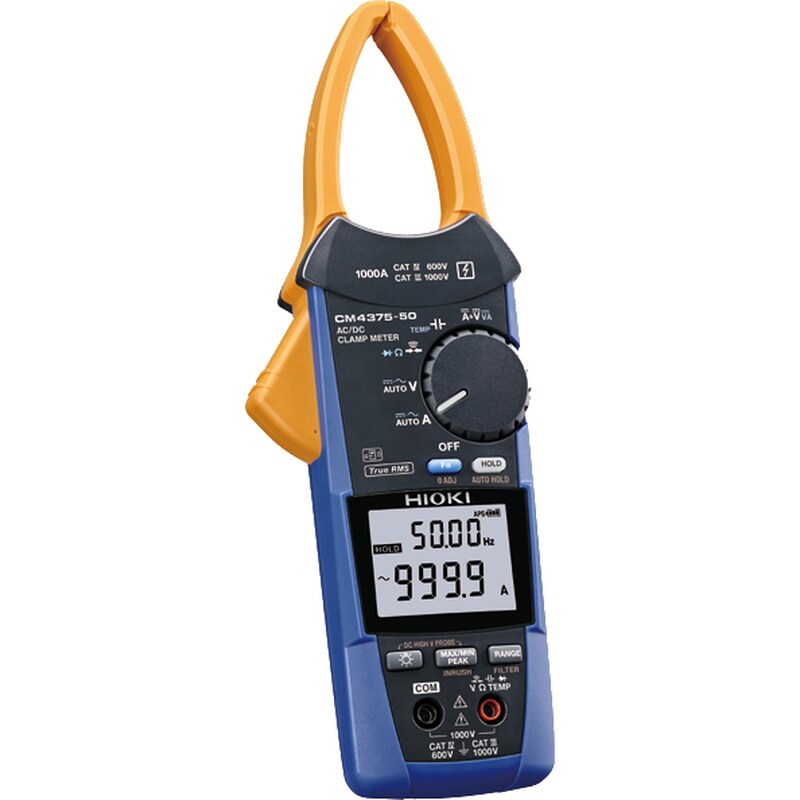
⚡ Hioki CM4375-50 — AC/DC Clampmeter, CAT IV 600V, 1000A, ±1.5% accuracy
View Product WhatsApp QuoteWhat Makes a Solar-Grade Clampmeter Different
Not all clampmeters are suitable for solar work. Budget meters often lack essential features. Here's what professional solar technicians require:
1. AC/DC Measurement Capability — Solar systems have both AC (inverter output, grid connection) and DC (batteries, charge controllers, DC strings) sides. An AC-only meter is useless on the DC side. A single AC/DC clampmeter handles both, eliminating tool swaps and saving time.
2. True RMS for Distorted Waveforms — Solar inverters produce switching waveforms with harmonics, not pure sine waves. Basic average-responding meters underestimate current by 10–25%. True RMS meters measure actual power, not a calculated average. For accurate commissioning data, True RMS is essential.
3. CAT IV 600V / CAT III 1000V Safety Rating — Solar systems operate at 400V–1000V. Professional liability insurance requires CAT IV minimum. Using an under-rated meter voids your coverage and creates liability if an incident occurs.
4. ±1–1.5% Accuracy — During commissioning, performance must match nameplate specs. A 50 kW system rated at 70A must actually read 68–72A. Budget meters with ±3–5% accuracy cannot reliably detect deviations.
Step-by-Step: Measuring Inverter AC Current
Scenario: Three-phase 50 kW solar system. You need to verify AC output current before grid connection.
Equipment needed: Hioki clampmeter, test leads (included), clipboard for notes.
Safety pre-check: Verify the inverter is running, check for burnt marks or loose connections, confirm adequate workspace.
Step 1: Power on the meter and set function to "AC A" (AC current mode).
Step 2: Press the trigger to open the clamp jaw.
Step 3: Locate the three AC output conductors from the inverter. Choose Phase A (first conductor), avoiding neutral and ground.
Step 4: Position the clamp so the conductor passes through the center of the jaw opening. Off-center positioning causes ~5–10% reading error.
Step 5: Close the clamp firmly by pressing the trigger again. Ensure full jaw contact.
Step 6: Wait 2–3 seconds for the True RMS value to stabilize (the display initially shows flickering numbers due to AC ripple). Record the stable reading.
Step 7: Release and repeat for Phase B and Phase C.
Expected result for balanced three-phase inverter:
- Phase A: 23.5A
- Phase B: 23.4A
- Phase C: 23.6A
- All within ±0.4% of each other ✓ System is balanced
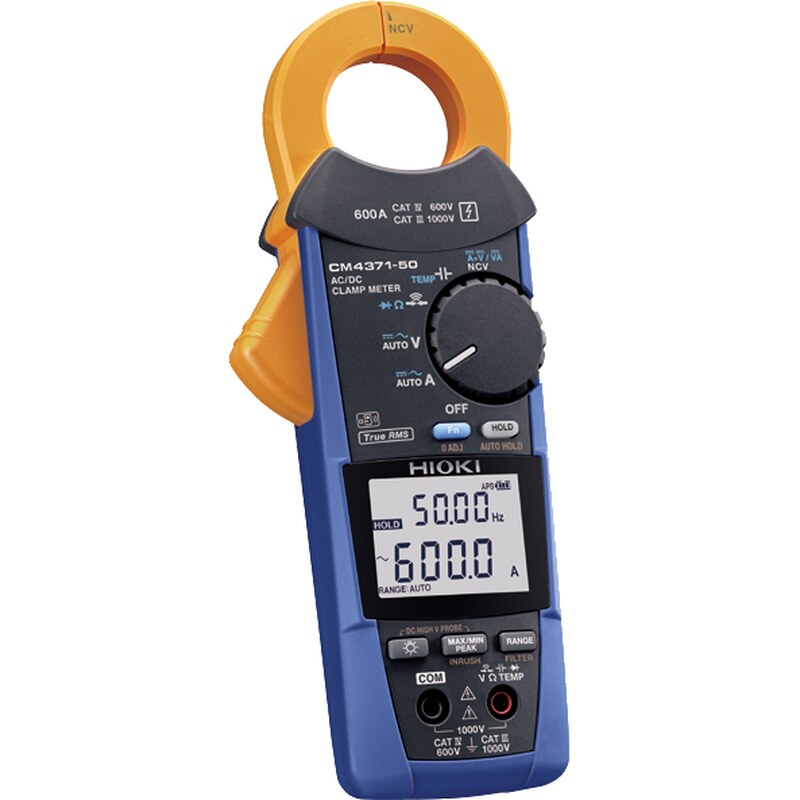
☀️ Hioki CM4371-50 — AC/DC Clampmeter, CAT IV 600V, 600A, for residential solar
View Product WhatsApp QuoteComparing Hioki AC/DC Clampmeters
| Model | AC/DC | CAT Rating | Max Current | Best For |
|---|---|---|---|---|
| CM4371-50 | AC/DC | CAT IV 600V | 600A | Residential solar, batteries |
| CM4375-50 | AC/DC | CAT IV 600V / CAT III 1000V | 1000A | Commercial solar (RECOMMENDED) |
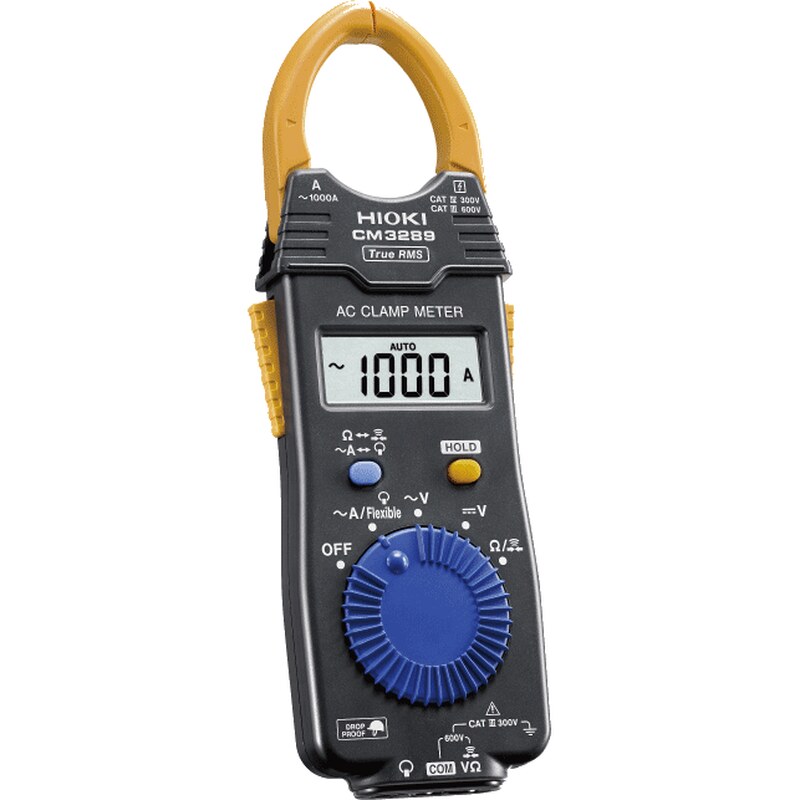
| CM3289 | AC only | CAT IV 600V | 1000A | Budget solar (AC circuits only) |
Choose based on your need: Residential solar (under 600A) → CM4371-50. Commercial or utility-scale → CM4375-50. AC-only work → CM3289.
Common Mistakes to Avoid
❌ Measuring around neutral or ground instead of phase conductors — You'll read 0A or nearly 0A. Identify the three colored phase conductors (typically black/red/blue or L1/L2/L3 markings).
❌ Not waiting for the reading to stabilize — Record a flickering peak value instead of the true average. Always wait 2–3 seconds.
❌ Positioning the conductor off-center in the clamp — Readings are ±5–10% low. Ensure the conductor passes through the exact center of the jaw.
❌ Using an AC-only meter and getting 0A on DC circuits — AC-only meters cannot detect DC current. Use an AC/DC meter.
Frequently Asked Questions
Q: Can I use a basic clampmeter on a solar system?
A: You can measure inverter AC output, but not the DC side. For complete system testing, you need AC/DC capability.
Q: Why is CAT IV 600V required?
A: Insurance companies mandate CAT IV minimum for professional electrical work. Using an under-rated meter voids your coverage.
Q: How do I verify my clampmeter is reading correctly?
A: Compare against the inverter's internal current display or a known reference. If readings differ by more than ±2%, recalibrate or have it certified.
Q: What does "True RMS" mean?
A: Solar inverters produce distorted waveforms with harmonics. True RMS measures actual power; basic meters calculate an "average" that underestimates by 10–25%.
Ready to Commission Your Next Solar Project?
The difference between a ₹6,000 meter and a ₹16,500 meter often comes down to one measurement error during commissioning. Undersized equipment due to inaccurate current data costs ₹50,000+. A professional clampmeter pays for itself on your first installation.
Contact Industrial Supply Syndicate for Hioki clampmeters with:
- Pan-India delivery (48–72 hours)
- GST invoice for corporate buyers
- 10-year manufacturer warranty
- Technical support